
Ok, so I was doing research for myself in regards to which cookware was the most non- toxic and guess what? I went down a rabbit hole. Ironically, I have worked in Leadership with a major cookware retailer and we received really great training and product information on cookware. Though I was more on the merchandising end of things I really gained an appreciation for the science that goes behind cookware- its actually really fascinating. I developed an interest for cooking through this new found insight but in the years since I began learning about cookware, I also have been on a precarious health journey which has required me to dig deeper to clean up anything in my life that can contribute or trigger my health issues. Trust me, I am still not 100% there and sometimes you just have to do what you can and not let it all overwhelm you. Its really difficult to create a non-toxic environment in today’s world as be are bombarded by toxins left and right. I created this objective guide not to tell you what to do but to share my own research I have been doing for myself. Honestly, it surprised me when I was done. I hope this guide helps you in doing your own research and provides a jumping off point.
Why is Teflon Bad and what are Forever Chemicals?
Think way back to the 1950’s- It was the realm. of new household inventions to help the common housewife become more efficient , it was the boom of simplifying steps, creating shortcuts, instant everything- and yeah I still kind of wish I could eat jello. Enter, teflon (originally known as Dupont) they were the Leaders in creating a newfound cookware with nonstick capabilites using a chemical called Polytetrafluoroethylene (PTFE) and eventually adding perfluorooctanoic acid (PFOA). Even despite health concerns from locals who lived near the manufacturing plant and studies that were conducted back in the 50’s, Dupont knowingly continued to produce this toxic cookware. Fast Forward to 2013, the Environmental Working group took a deeper dive which resulted in PFOAs were removed from Teflon. But the story does not end there I am afraid…..
PFAS, also known as “forever chemicals” are aptly named due to the fact that they do not break down easily, and remain in both the body and environment for decades and sometimes for life. As a result, 90% of the population has PFAS in their body. These chemicals are made up of 5,00 substances that are found in anything from non stick coatings, to mascara, food packaging, water bottles, waterproof clothing. and the list goes on. The heath effects are far and wide from endocrine disruption to cancer. An article by the Science of The Total Environment indicated that 1 5 cm scratch to teflon pans releases up to 2.3 million microplastic particles.

Most Risky
- Non- Stick
- I think the above covers non stick BUT you would be shocked to know that there are still a lot of chemicals used in creating non- stick cookware currently (and in top brands) so the biggest concern is when the protective coating is chipped, wearing away or damaged more chemicals leach through. I have been victim to buying cookware that says non toxic non- stick and such but due to possible heavy metal issues I just stay away from it personally.
- Lead
- high risk- this is a chemical that can easily leach out of a lot of different types of cookware including class an even some ceramic cookware as its used to make cookware more durable and shock resistant. This one is a tough one to confirm so choosing cookware with the least likely materials to leach lead is ideal
- Aluminum
- I feel like nearly all cookware out there has some form of aluminum within the core. This in of itself is not bad it just means that is you are rough with your cookware or dont care for your cookware, over time you will wear away the protective coating to where the possibility of metals leaching into your food becomes high. I put copper in this category also though I really love copper and hope to have a collection one day but the trick is that you have to really know how to both cook with it and care for it. This will get its own post
Mid Level Risk
- Enamel and Ceramic Coated
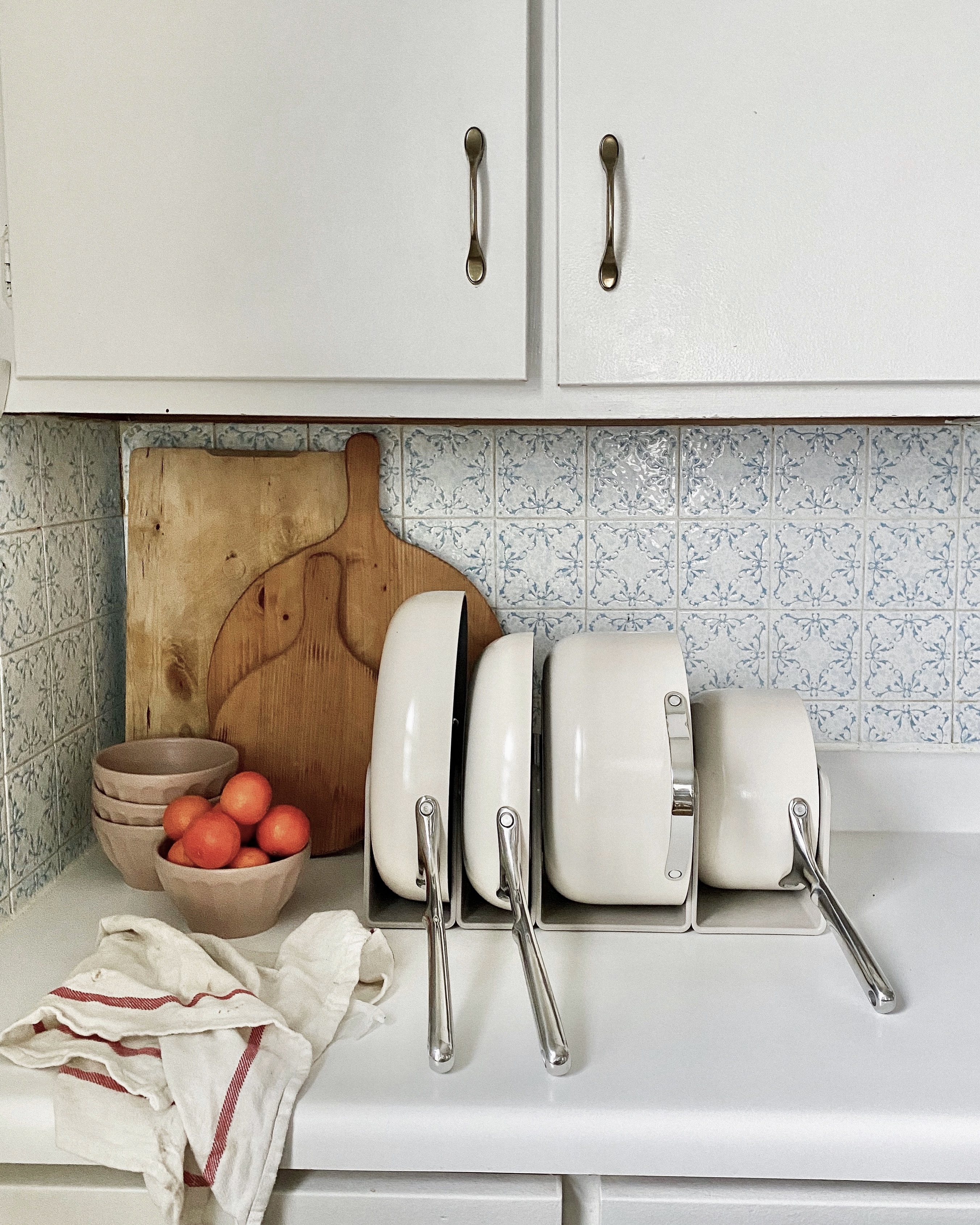
- I put this in the mid level because I actually own Caraway ceramic coated cookware myself along with enamel cookware like Le Creuset and love them both but very cautious about caring for them by not using abrasive cleaning agents or scrubbers, using only wood or silicone utensils. I also avoid high heat because like the others mentioned above, enamel and ceramic coatings can wear easily allowing metals to leach through into your food. They also both scratch easily creating the same open door to leaching. I absolutely love how smart Caraway’s storage system is.
Low Risk- Safest
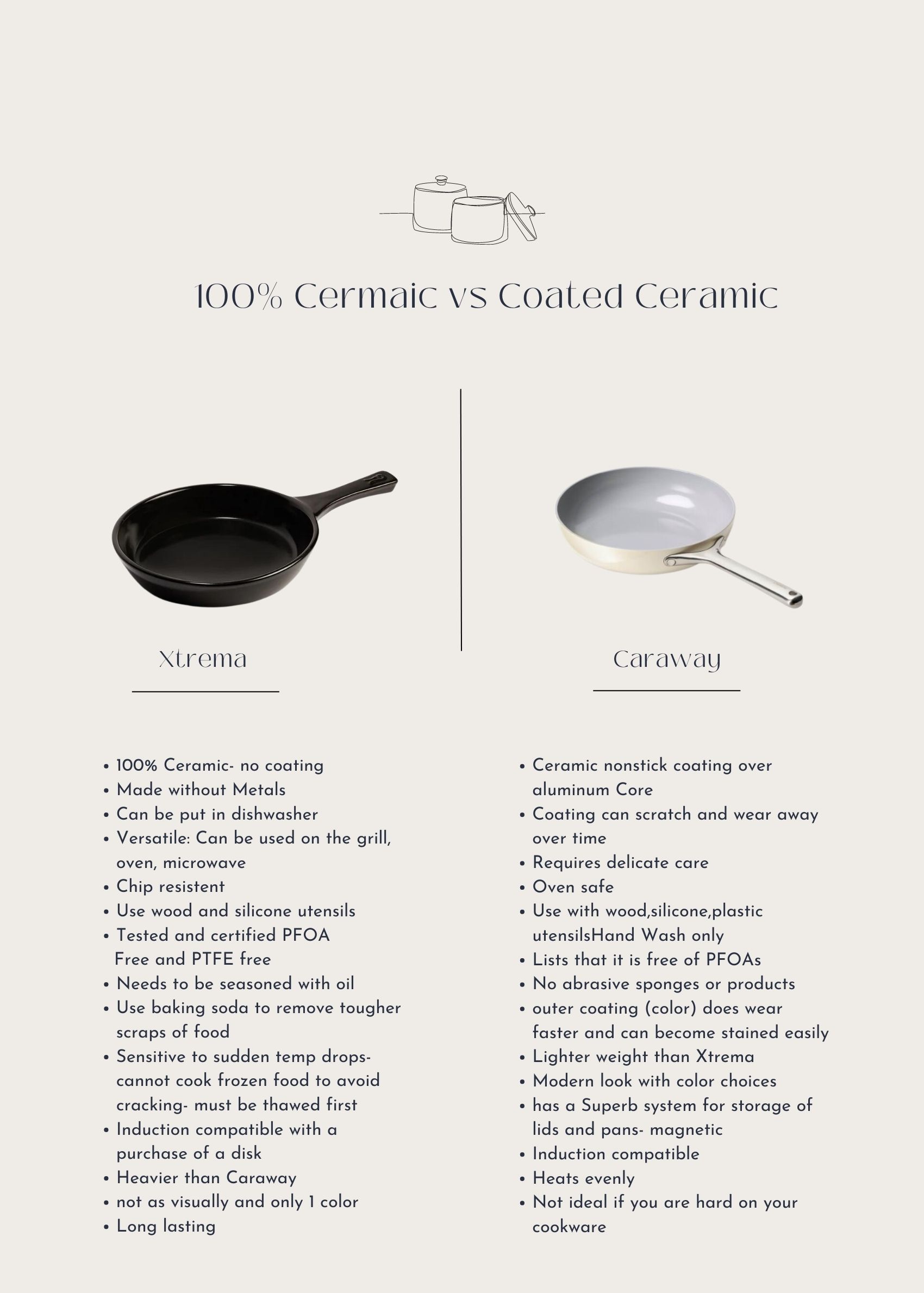
Please see my side by side comparison guide below for the top 3 listed
- 100% Ceramic (safest)- brand top pick: Xtrema
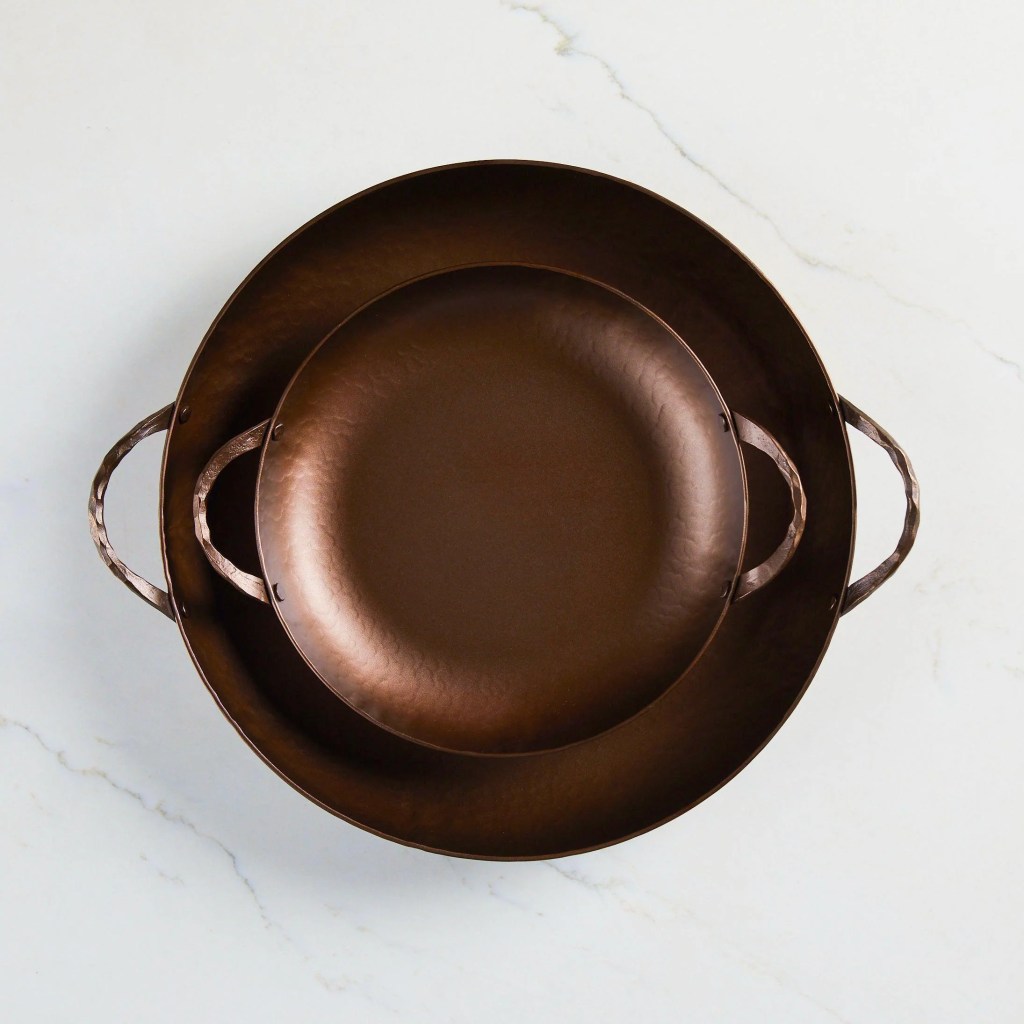
- Carbon Steel- Brand top pick: Smithey
- Cast Iron- Brand top Pick: Smithey and classic Lodge – not blacklock
- Stainless steel- Brand top pick: 360 Cookware
- Stainless and cast iron are pretty neck and neck for me as they both are very durable, last forever and easy to care for. Stainless can sometimes leach nickel and which many people are not an issue unless you have a sensitivity. In contrast, Iron and Carbon Steel can also leach iron which also is not an issue with most people unless you have a sensitivity or super high Iron levels.
Top pick for most beautiful Non- Toxic Cookware
Smithey- I am obsessed with this stunning cookware and hope to invest in some in the near future
Favorite Non- Toxic Brands
here is my round up of my top pics using the above info

Sources
All Clad | Xtrema | Smithey | Staub | 360 cookware | Caraway | Lodge
Comparing and Contrasting
These were my top things I wanted to understand between these cookware types and Brands. Please note that this is a culmination of information I found both in researching materials and reviewing product websites.

Follow Me Online



Subscribe
For Newest Art work releases
 viagiulian.com
Leave a comment